




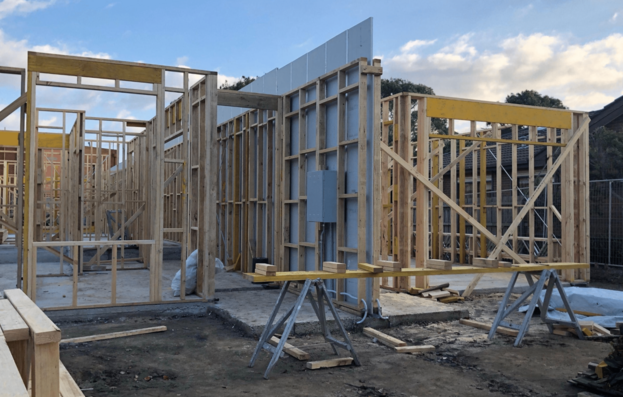
Every home build has a budget. Very few finish within it.
It’s a pattern that plays out across thousands of projects every year: the final invoice looks nothing like the first estimate, and homeowners are left wondering where their contingency went. The industry tends to shrug and blame “the nature of building.” The truth is more specific and more fixable.
Most budget overruns aren’t caused by rising material costs, unlucky decisions made mid-build, or bad builders. They’re caused by decisions made at the very start of the project, based on information that hadn’t yet been verified. By the time the gap between assumption and reality shows up, the cost of correcting it has multiplied several times over. In many cases, a relatively small investment at the beginning of the process would have caught the problem entirely – before it had a chance to compound.
Here’s what causes it, and what a small amount of upfront work can do about it.
The Early Quote Problem
Every quote you receive early in a project is built on assumptions about your site. This isn’t bad faith; it’s just how the industry works. Builders and designers price what they can see. Anything they can’t see gets estimated, and estimates lean optimistic, because nobody wins a job by quoting high for hypothetical problems.
The gap between those estimates and the real site conditions is where overruns live. And that gap is almost always the site itself, not the materials or the labour. What looks like a straightforward residential block from the street can present a very different picture once it’s been properly measured, located, and understood. The assumptions get locked into a design, a contract is signed, and the surprises arrive with the earthworks invoice.
What the Ground Actually Looks Like
A plot that reads as “gently sloping” to the eye can have more than a metre of fall across it. That doesn’t just change the look of the finished house. It changes the foundations, drainage, retaining structures, and whether you need a raised-floor design at all. Sites that look buildable on a first visit sometimes turn into five-figure earthworks problems once the contours are properly measured.
Boundaries are another quiet source of expensive surprise. The fence you’ve been looking at for years may sit several hundred millimetres inside or outside the legal boundary. Design a house assuming the fence line is the title line, and you can end up too close to a neighbour’s property, in conflict with planning requirements, or facing a dispute that costs more to resolve than any survey would have. These aren’t edge cases; they’re common outcomes on sites that were never properly checked.
Underground services create the same problem from a different angle. Sewer lines, stormwater drains, and utility easements don’t appear on estate agents’ floor plans. They show up when you start digging, by which point the design is locked in and changing it means going back several steps, often at high cost.
Good Surveys Prevent This. Cheap Ones Don’t Always.
The solution is obvious in principle and ignored in practice: get a proper site survey before anyone prices or designs anything.
But not every survey is created equal. The difference between a good land survey and a cheap one shows up in how much detail is captured, how accurately features are recorded, and whether the data is clean enough for your engineer and architect to design from directly. A survey that misses a drainage swale, underestimates a level change, or mislocates a mature tree by a metre will quietly poison every decision that follows.
The firms worth engaging capture more than you think you need, deliver data your consultants can rely on without caveat, and provide practical guidance on pre-construction surveying to remove the guesswork out of the process entirely. A few hundred dollars saved on a survey can translate to tens of thousands in variations once construction begins.
Where Modern Survey Tools Change the Picture
For straightforward plots, traditional survey methods still work well. For complex sites, renovations, or properties with existing structures, 3D laser scanning has quietly transformed what’s possible. A laser scanner captures millions of data points in a single session and produces a digital model of the site accurate to within a few millimetres. Designers, engineers, and builders can work directly from that model, rather than interpreting a 2D drawing and making assumptions about what isn’t shown.
It remains a premium service for most residential builds. But on sites where access is tight, existing buildings are being retained, or ground conditions are unusual, it can pay for itself many times over in avoided rework and variations.
Front-Load the Decisions That Matter
The pattern separating builds that come in on budget from builds that don’t isn’t luck, and it isn’t ruthless value engineering mid-project. It’s the willingness to spend a small amount of money early – replacing assumption with verified data – before anyone has committed to a design or signed a building contract.
Most overruns are priced in months before the first concrete pour. The people who avoid them tend to understand this. The ones who don’t find out the hard way.

 POSTED BY