


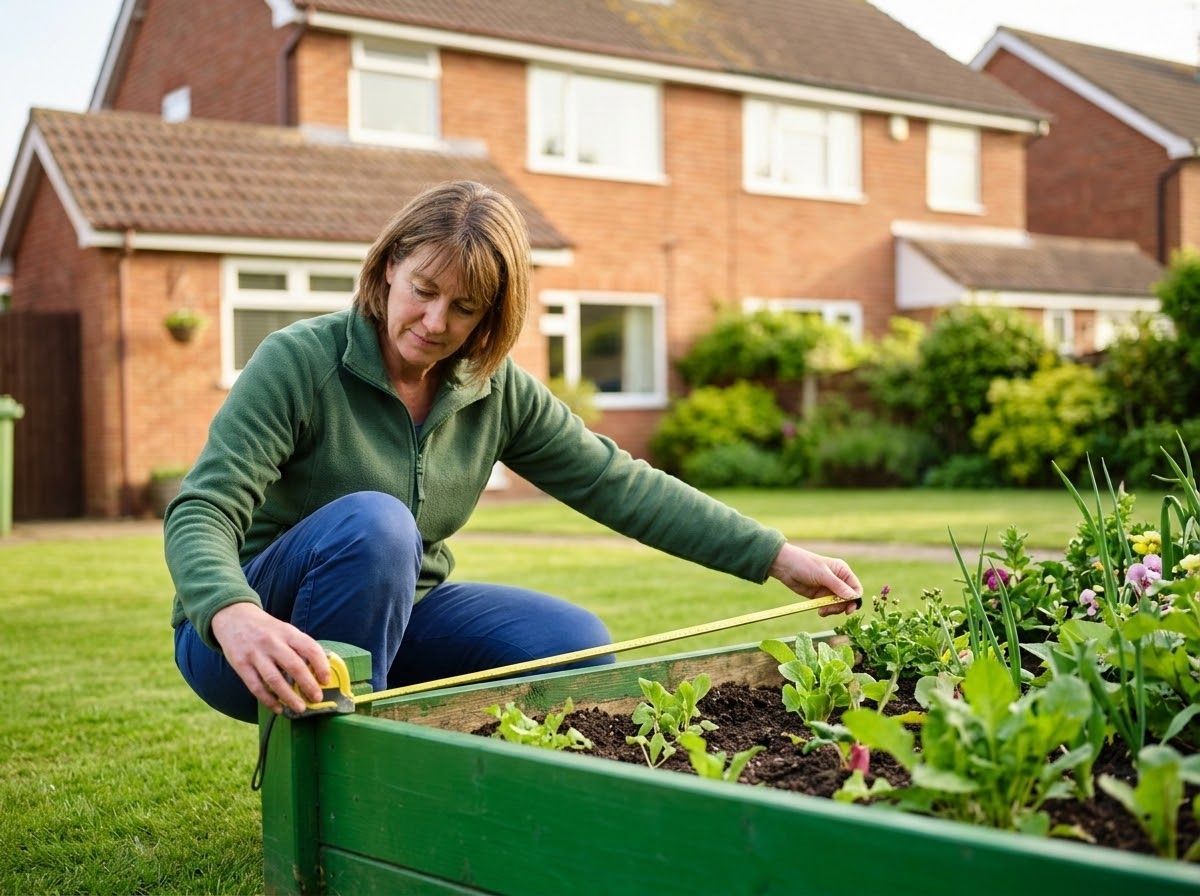
Planning a garden, installing a new lawn, or filling raised beds might require more soil than you expect at first glance, especially if you’re not doing this for the first time. Buying too little can delay the entire project, while ordering too much may leave you with bags of soil lying around for months or years, not to mention the money spent.
If you grab a measuring tape and a good calculator, estimating how much soil you need may be relatively straightforward, but a few things may surprise you. In this guide, we explore the most common soil calculation mistakes and explain how to avoid them.
1. Measuring Your Garden Incorrectly
One of the most common mistakes is taking inaccurate measurements. Even a small error in a garden bed’s length or width can noticeably affect the amount of soil required, especially over a large area. This is due to the multiplication involved. Even half a metre off may result in a noticeable discrepancy in the soil needed.
How to avoid itCarefully measure the length and width of the area y using a tape measure. For a rectangular or square space, multiply the length by the width to calculate the area.
For example, a garden bed measuring 5 metres long and 3 metres wide has an area of 15 square metres. A soil calculator helps you avoid basic math mistakes while estimating how many bags you need to buy, how much they’ll weigh, and the total cost.
If your garden is irregularly shaped, divide it into smaller rectangles or squares, calculate each area separately, and add the results. For a circular area, use the formula for the area of a circle. In any case, double-check your measurements before ordering.
2. Forgetting to Account for Soil Depth
Knowing your garden’s area is only half the calculation. You also need to determine how deep the soil layer should be, and just because the depth looks similar to your previous project doesn’t mean you can eyeball it. Even a centimetre or two off can result in ordering significantly less or more soil than needed, especially for larger areas.
How to avoid it:
Decide on the required soil depth before calculating the volume. Then multiply the area by the depth, making sure both measurements use the same units.
For example, if you want to spread topsoil over a 15-square-metre garden to a depth of 10 centimetres, convert the depth to metres (0.1 metres) and calculate:
15 m² × 0.1 m = 1.5 m³ of soil
This gives you a starting estimate of 1.5 cubic metres.
If you’re unsure how deep the soil needs to be, consider the area’s intended use and the requirements of the plants or turf you plan to install.
3. Measurement Units Mix-Ups
A frequent mistake is mixing metres and centimetres in the same equation. This often happens with depth measurements and can lead to ordering far too much or too little soil. For instance, using a depth of 10 directly in a calculation in which the area is in square metres would produce an incorrect result if the intended depth was 10 centimetres.
To avoid it, convert all measurements to the same unit before calculating soil volume. For cubic metres, use metres for length, width, and depth.
Useful conversions include:
·1 metre = 100 centimetres
·10 centimetres = 0.1 metres
·1 cubic metre = 1,000 litres
Once your measurement units are consistent, multiply the area by the depth to calculate the required soil volume.
4. Ignoring Uneven Ground
Gardens are not always perfectly level and any sloping, dips, and unevenness can make it difficult to estimate how much soil is needed. Calculating the volume using a single depth across an uneven surface may result in an inaccurate overall estimate.
Ways to avoid it:
For uneven ground, measure the depth needed at several points across the area, even a dozen or more if necessary. Average the depth measurements out and use that average depth in your volume calculation. For example, if one end of a garden needs 5 centimetres of soil and the other needs 15 centimetres, an average depth of around 10 centimetres may be a reasonable number to use given the slope is relatively uniform.
For larger landscaping projects, divide the area into smaller sections, calculate each separately, then sum them up. This will likely improve accuracy.
5. Forgetting to Allow for Settling and Compaction
Freshly delivered soil usually settles a bit after spreading, watering, or compacting. As a result, the finished soil layer may be shallower than it was immediately after installation. This effect becomes especially visible after several weeks of settling and matters most when filling raised beds or preparing ground for landscaping.
How to avoid it:
Consider the type of soil, its moisture content, and how it will be used. You may need to order a modest additional amount to account for settling. However, applying a blanket allowance to every project may not be a good idea because soils settle differently. If you’re filling a raised bed, check if there is a recommended fill volume and whether it refers to loose soil or the intended finished level.
6. Ordering Without Checking the Soil Type
A perfectly calculated quantity won’t lead to a successful project if you order the wrong soil type. Topsoil, compost, potting mix, and specialist lawn or planting soils have different properties, which means that choosing an unsuitable product can affect key project characteristics. The wrong soil type may hinder drainage and plant growth and compromise the overall outcome.
How to avoid:
Identify the purpose of your project before placing an order. For example, consider whether you need topsoil for levelling or establishing a lawn, a soil suitable for raised beds, or a growing medium for containers. Check the product description for the intended application.
Getting your soil calculations right can save time, cut unnecessary costs, and keep a garden project running smoothly. Measure carefully, use consistent units, and choose the right soil type for each job to avoid the most common mistakes.
Ref:4387.38430/ORD6ACCD3C437933
 POSTED BY