



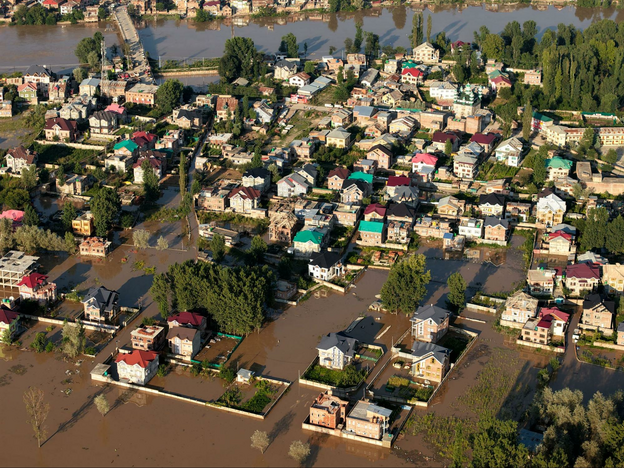
Flooding is no longer a distant risk for a small number of unlucky homeowners. According to the Environment Agency, 6.3 million properties across England are currently at risk from rivers, the sea, or surface water – and that number is expected to climb to 8 million by the middle of the century as climate change intensifies rainfall patterns and sea levels rise.
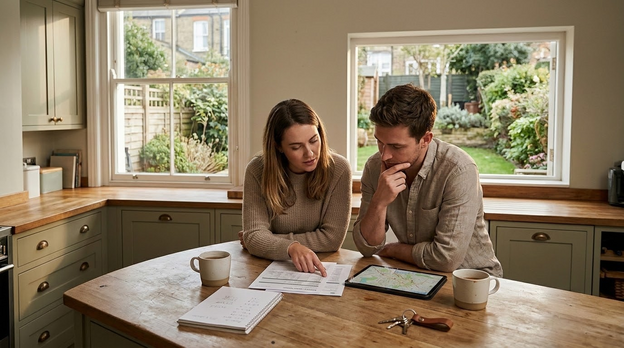
If you have ever found yourself searching ‘is my home in a high risk flood area’, you are not alone. Whether you are thinking about buying a property, planning an extension, renewing your home insurance, or simply concerned after a spell of heavy rain, understanding your flood risk is one of the most important things you can do as a homeowner.
This guide explains what the UK flood zone system means, how to check your risk for free, and what practical steps you can take to protect your home and finances.
Understanding the UK Flood Zone System
In England, the Environment Agency divides land into three flood zones based on the probability of flooding from rivers and the sea. These zones do not account for flood defences, so a property in a high-risk zone may actually be well protected – but the classification still carries significant weight for planning, insurance, and mortgage purposes.
Flood Zone 1 – Low Probability
Properties in Flood Zone 1 have less than a 1 in 1,000 (0.1%) annual chance of flooding. This covers the majority of homes in England. There are few planning restrictions, although any development over one hectare still requires a formal flood risk assessment.
Flood Zone 2 – Medium Probability
Flood Zone 2 properties face between a 1 in 100 and 1 in 1,000 annual chance of flooding from rivers, or between 1 in 200 and 1 in 1,000 from the sea. Insurance premiums may be modestly higher, and some planning applications will require a flood risk assessment.
Flood Zone 3 – High Probability
Flood Zone 3 carries a greater than 1 in 100 annual chance of flooding from rivers, or more than 1 in 200 from the sea. Within this zone, Zone 3b is classified as the functional floodplain – land that naturally stores floodwater – where new development is almost entirely prohibited. Properties in Zone 3 face the greatest restrictions on development and the most significant impact on insurance and property value.
Flood Risk Is Not Just About Rivers and the Sea
Many homeowners focus on river flooding, but surface water flooding affects more properties in England than any other source. This happens when heavy rainfall overwhelms drainage systems, causing water to pool in streets, gardens, and eventually inside homes – often with very little warning.
Other sources of flood risk include:
• Groundwater flooding, which occurs when water tables rise and water seeps up through the ground, particularly in areas with chalk or limestone geology.
• Reservoir flooding, which is rare but potentially severe, affects communities downstream of dams and embankments.
• Sewer and drainage flooding, which can occur independently of any local watercourse and is particularly common in older urban areas.
A comprehensive assessment of your property should consider all of these sources, not just proximity to a river or coastline.

.
How to Check If Your Home Is in a High Risk Flood Area
Use the Government’s Free Flood Risk Tool
The quickest way to check your flood risk is through the Government’s Check the long-term flood risk for an area in England service. Simply enter your postcode to see your current flood zone, your risk from surface water, and a projection of how climate change may affect your risk over the coming decades. The tool is free, requires no registration, and is updated regularly by the Environment Agency.
You will receive a colour-coded result showing your risk level as very low, low, medium, or high for each flood source. If your risk is flagged as medium or high, it is worth taking further steps to understand what that means for your property specifically.
Sign Up for Flood Warnings
The Environment Agency offers free flood warning alerts by phone, text, or email. Registering takes a few minutes and can give you vital early notice to move valuables upstairs, place flood barriers, and prepare to evacuate if necessary. Visit GOV.UK or call Floodline on 0345 988 1188 to register.
Request a Flood Risk Assessment
If you are planning a development, applying for planning permission on a site in Zone 2 or 3, or purchasing a property in a medium or high-risk area, you will likely need a formal flood risk assessment. Specialist flood risk consulting professionals can carry out a site-specific assessment that accounts for local ground conditions, drainage infrastructure, climate projections, and any existing flood defences – providing a much more detailed picture than the national mapping tools alone.
How Flood Risk Affects Your Home Insurance
Living in a flood-risk area does not mean you cannot get home insurance, but it will almost certainly affect your premium and may limit your options. According to the Association of British Insurers (ABI), the cost of domestic flood claims rose by 38% in 2025, with the average flood payout to a homeowner reaching £30,000 – a 60% increase year-on-year.
The Flood Re Scheme
The UK Government and the insurance industry jointly run a scheme called Flood Re, which was introduced in 2016 specifically to make flood insurance more affordable for higher-risk properties. Under the scheme, insurers can pass the flood element of your policy to Flood Re, which charges a fixed premium based on your council tax band rather than your individual risk profile.
To be eligible, your home must have been built before 1 January 2009. The scheme is set to run until 2039, at which point risk-based pricing is expected to come into full effect – a significant concern for homeowners in high-risk areas who may find their properties harder to insure or sell.
Not all insurers participate in Flood Re, so it is worth comparing quotes across multiple providers if your current premium feels unreasonably high.
How Flood Risk Affects Property Value
Research from Bayes Business School found that flood-exposed properties typically sell for around 8% less than comparable properties in lower-risk areas, with the highest-risk homes facing discounts of more than 30%. These are not minor adjustments – on a £350,000 property, an 8% discount represents £28,000, rising to over £100,000 in extreme cases.
The Bank of England has also warned that the most flood-vulnerable properties could lose up to 20% of their value in the most severe climate scenarios. For buyers and homeowners alike, understanding this risk before purchasing or investing in a property has never been more important.
Flood risk also affects mortgage availability. Some lenders will require additional documentation, adjust terms, or decline applications entirely for properties in high-risk zones without adequate insurance in place.
Practical Steps to Protect Your Home From Flooding
Being in a flood risk area does not mean you are powerless. There is a growing body of Property Flood Resilience (PFR) measures that can significantly reduce both the likelihood of water entering your home and the damage caused if it does.
Resistance Measures
These aim to keep floodwater out of your property altogether:
• Flood doors and barriers installed at external doorways and airbrick openings.
• Automatic airbrick covers that close when water reaches them, requiring no manual intervention.
• Non-return valves on all drains and water inlet pipes to prevent sewage backflow.
• Waterproof tanking of basement walls and floors to prevent groundwater ingress.
Resilience Measures
These reduce the damage caused if water does enter:
• Raising electrical sockets to at least 1.5 metres above ground level.
• Replacing carpets with tiled floors and using rugs that can be lifted and moved.
• Installing stainless steel, solid wood, or free-standing kitchen units that can be relocated.
• Fitting sump pumps to remove any water that does get in.
Research suggests that every £1 spent on property flood resilience provides £5 in savings on future damage costs. Even relatively modest investment in resistance products can make an enormous difference to the speed and cost of recovery after a flood event.
Before You Buy a Property in a Flood Zone
If you are considering purchasing a home in a medium or high-risk area, there are several steps to take before you exchange contracts:
• Get an insurance quote before committing – do not assume cover will be affordable or available.
• Ask the seller to disclose full flood history on the Property Information Form (TA6), including depth, frequency, and any damage caused.
• Commission a professional flood risk assessment to evaluate the specific vulnerability of the building, particularly where the Environment Agency’s national map may not reflect local conditions accurately.
• Check whether any flood defences in the area are maintained and to what standard, as defences reduce risk but do not eliminate it entirely.
When to Seek Professional Advice
The national flood risk tools available through GOV.UK are a useful starting point, but they are based on broad national datasets. They may not capture the full complexity of a specific site’s drainage, ground levels, proximity to smaller watercourses, or the condition of nearby flood defences.
You should consider seeking professional flood risk advice if:
• Your property is in Flood Zone 2 or 3, and you are planning development, an extension, or a major renovation.
• You are buying a property, and the national tools flag medium or high risk from any source.
• You have experienced flooding and want to understand your ongoing exposure and mitigation options.
• Your insurer has asked for a flood risk report as a condition of cover.
• You are preparing a planning application that requires a formal Site-Specific Flood Risk Assessment.
Working with a qualified specialist ensures you get an accurate, site-level view of your risk – not just a postcode-level indicator – and can significantly strengthen your position with insurers, mortgage lenders, and planning authorities alike.
What Is Being Done About Flood Risk in England?
Flood risk management is a growing policy priority. In June 2025, the Labour Government announced a record £7.9 billion over ten years for capital spending on flood defences – the largest commitment of its kind. This investment is intended to protect over 100,000 additional properties and improve the resilience of existing defences that have been deteriorating in recent years.
At a local level, Lead Local Flood Authorities and the Environment Agency work together to manage surface water, groundwater, and ordinary watercourse flooding. While these schemes reduce risk, it is important to remember that no flood defence can guarantee complete protection – residual risk always remains, and individual property-level measures remain essential.
Final Thoughts
Flood risk in England is real, growing, and affects far more properties than most homeowners realise. Whether you are a current homeowner, a prospective buyer, or a landlord, understanding where your property sits in the risk landscape – and what that means for your insurance, property value, and long-term plans – is no longer optional.
The good news is that the tools and expertise to help you navigate flood risk have never been more accessible. Start with a free check on the Government’s flood risk tool, sign up for flood warnings, and if your risk is flagged as medium or high, consider investing in either resilience measures or a professional assessment before your next policy renewal or property transaction.
The cost of preparation is almost always far less than the cost of recovery.
Ref: 4345.37998

 POSTED BY