



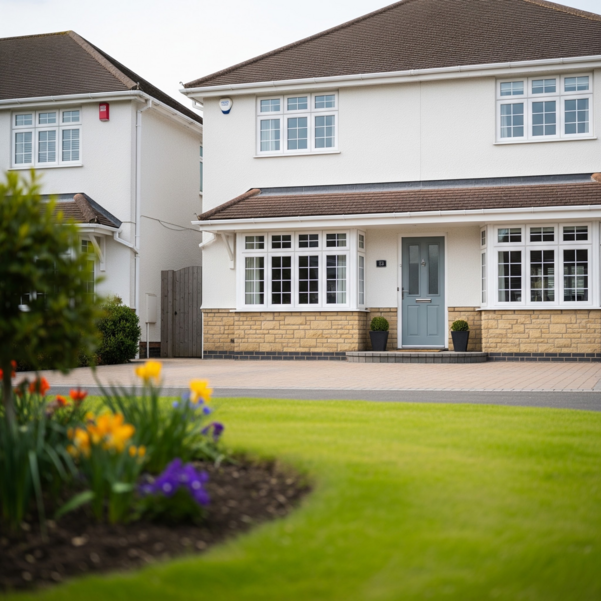
Walk down any street in Britain, and you’ll spot them. Homes with green-streaked gutters. Conservatories dulled by years of grime. Driveways black with algae.
The owners aren’t lazy. They’re busy. Exterior maintenance tends to slip down the list because damage occurs slowly. You don’t notice moss creeping across your roof in a single weekend. You notice it three years later when a roofer hands you a quote.
Here’s the uncomfortable question. When did you last look up at your own gutters?
This article covers the exterior jobs homeowners most often forget, why they matter, and what happens when they’re ignored.
Window Cleaning
Window cleaning sounds obvious. Yet it’s one of the first jobs to slide once the novelty of a new home wears off.
Dirty glass isn’t just a cosmetic issue. Over time, mineral deposits from rainwater etch into the surface. Bird droppings are acidic and can permanently mark glass if left for weeks. On coastal properties, salt spray builds up fast and accelerates frame corrosion.
There’s also the light factor. Studies on daylight in homes consistently show that natural light affects mood and even energy bills. A layer of grime can noticeably reduce the light passing through a pane. You’re paying for windows you can’t fully use.
Think about your window frames too. uPVC frames trap dirt in the seals and drainage holes. Blocked drainage channels in frames cause water to pool, which leads to dampness around the sills inside.
A sensible routine looks like this:
- Every 4 to 8 weeks for general cleaning, more often near main roads or the coast
- Check frame drainage holes twice a year and clear them with a thin brush
- Clean sills and seals, not just the glass
Ask yourself honestly. Are you cleaning the glass and ignoring everything around it?
Gutter Clearing
Gutters are the classic out-of-sight, out-of-mind problem. You can’t see inside them from the ground. So most people assume they’re fine.
They’re often not. A single mature tree nearby can fill a gutter run with leaves in one autumn. Add moss washing off the roof, a tennis ball, a bird’s nest, and you’ve got a blocked system channelling water exactly where you don’t want it.
Blocked gutters cause real damage:
- Overflowing water saturates brickwork, leading to penetrating damp inside
- Water pooling at the base of walls can affect foundations over time
- Constant overflow rots timber fascias and window frames
- In winter, trapped water freezes, expands, and cracks the guttering itself
The cost comparison is stark. A professional gutter clear on a typical semi costs somewhere in the region of £70 to £150. Repairing damp-damaged plaster and redecorating a single room can run into four figures. Replacing rotten fascias costs more again.
Twice a year is the standard advice. Once in late autumn after the leaves drop, and once in spring. Homes surrounded by trees may need more.
Here’s a quick test. Next time it rains heavily, step outside and look at your gutters. Is water spilling over the edge anywhere? That’s your answer.
Fascia and Soffit Cleaning
Most homeowners couldn’t point to their fascias and soffits if asked. Which is exactly why they get forgotten.
The fascia is the board running along the roofline that holds the gutter. The soffit is the panel underneath, bridging the gap back to the wall. Together, they protect the roof edge and keep the weather out of your loft space.
White uPVC fascias turn green and grey remarkably quickly. Algae love the damp, shaded conditions up there. And because they sit at roof height, nobody cleans them during a normal tidy-up.
Why does it matter beyond looks?
- Algae and dirt hold moisture against the boards, shortening their lifespan
- Soffits often contain ventilation grilles. Blocked grilles reduce airflow into the loft, raising the risk of condensation and rot in roof timbers
- Grime hides genuine problems. Cracks, gaps and failing joints go unnoticed under a layer of dirt
Clean fascias also transform kerb appeal. Estate agents talk about first impressions for good reason. Buyers form opinions within seconds of pulling up outside. A crisp white roofline suggests a home that’s been well cared for. A green one suggests the opposite, fairly or not.
An annual clean, usually done alongside a gutter clear, keeps them in good shape. It also gives someone a proper close-up look at your roofline once a year. Small problems get spotted early.
Conservatory Cleaning
A conservatory is often the most expensive addition a homeowner ever makes. Then, many people never clean the roof. Not once.
It makes little sense when you think about it. The roof is the part most exposed to weather, bird mess, moss and falling debris. It’s also the part that makes the room feel bright and open. A dirty conservatory roof can turn a light-filled space into a gloomy one.
The problems stack up:
- Algae and lichen bond to polycarbonate and glass roofs, becoming harder to remove each year
- Debris collects in the valleys and box gutters between the conservatory and house, causing leaks that are expensive to trace
- Dirty finials, crestings and frames degrade faster under trapped moisture
- Self-cleaning glass still needs occasional washing, despite the name
There’s a practical warning here too. Conservatory roofs are fragile. Polycarbonate panels crack under body weight, and glass roofs should never be walked on. This is a job for proper equipment, water-fed poles, or a professional. Every year, people injure themselves leaning ladders against conservatory frames that were never designed to take the load.
Once or twice a year is enough for most conservatories. Homes under trees will need more attention, particularly for the box gutter.
When did you last actually look at your conservatory roof from an upstairs window? Go and check. You might be surprised.
Moss Removal
Moss is Britain’s most persistent uninvited guest. Our mild, wet climate is perfect for it. North-facing roofs and shaded driveways are especially vulnerable.
On roofs, moss causes more trouble than most people realise:
- It holds water like a sponge against tiles, keeping them permanently damp
- In freezing weather, that trapped moisture expands and can crack or delaminate tiles, particularly older concrete ones
- Thick moss lifts tile edges, letting wind-driven rain underneath
- Clumps break off and slide into gutters, causing the blockages covered earlier
A single frost-damaged tile lets water into the roof structure. Left alone, that means wet timbers, damaged insulation and stained ceilings. Roof repairs of that kind regularly cost hundreds or thousands of pounds. Moss removal costs a fraction of that.
Removal method matters. Aggressive pressure washing strips the protective surface from roof tiles and forces water under them. Careful manual scraping followed by a biocide treatment is the accepted approach among reputable roofing firms. The biocide kills spores and slows regrowth for years, not months.
Moss on paths and driveways is a different risk. It’s a slip hazard, plain and simple. Wet moss on smooth paving is treacherous, particularly for older residents. If a family member has ever skidded on your path in winter, moss was probably involved.
Pressure Washing
Pressure washing is the job people mean to do every spring and somehow never get round to. Meanwhile, the driveway darkens year by year, so gradually that nobody notices until they see an old photo of the house.
What benefits come from a proper wash?
- Block paving, which traps dirt and weeds in the joints
- Concrete and tarmac driveways stained by oil, algae and general grime
- Patios, where algae makes natural stone dangerously slippery
- Decking, though this needs a low-pressure approach to avoid tearing the wood grain
- Render and brickwork, again with careful pressure control
The safety point deserves repeating. Algae-covered patios and paths cause genuine injuries every winter. A clean, treated surface grips underfoot. A green one doesn’t.
There’s a financial angle too. Kerb appeal research from property portals has repeatedly suggested that tidy, well-maintained exteriors can add meaningful value to a property’s sale price, with some estimates ranging from 2 to 5 per cent. On an average UK home, that’s thousands of pounds. A clean driveway is one of the cheapest contributions to that impression you can make.
Technique matters more than power. Too much pressure damages pointing, strips sealant from block paving and etches soft stone. Resanding block-paving joints after washing prevents weeds from returning quickly. Many people skip this step and wonder why the weeds are back by August.
Building a Simple Routine
None of these jobs is difficult to remember once it’s in a routine. The problem is that most homeowners have no routine at all for the outside of their house.
Try this as a starting point:
- Spring: pressure wash driveways and patios, clean the conservatory, clear gutters
- Summer: window cleaning on a regular cycle, check fascias and soffits
- Autumn: clear gutters again after leaf fall, inspect the roof for moss
- Winter: keep paths free of algae and moss for safety
Or, simpler still, book a professional exterior clean once or twice a year and let someone else remember for you.
Your home’s exterior takes a battering from British weather every single day. The question isn’t whether these jobs need to be done. It’s whether you’ll do them before the damage bill arrives or after.

 POSTED BY